





01
Business service and dependency modeling
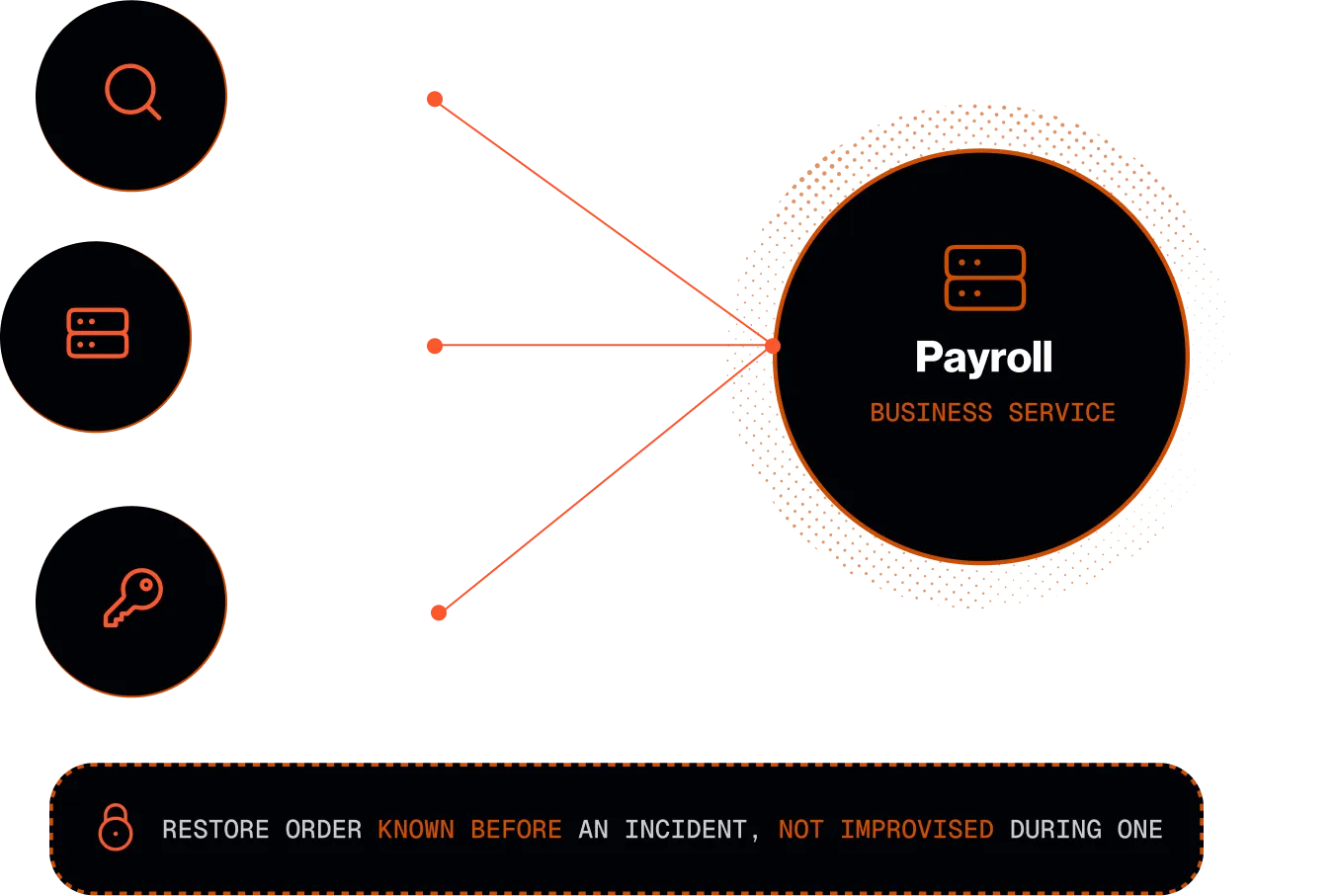
Argos99 maps the full chain beneath each critical business service, down to individual data repositories. If payroll depends on a database server, an identity provider, and a file share, all three appear in payroll’s recovery picture, and a problem with any one of them is flagged as a payroll problem.
02
Recovery
sequencing
Dependencies dictate restore order, and Argos99 derives it automatically: identity and core infrastructure first, then the systems that rely on them, then the applications on top. Your team sees the sequence before an incident instead of debating it during one.
03
Backup coverage
analysis
Job success is not protection. Argos99 evaluates whether backup tools and storage are configured for immutability, which servers critical to business applications are missing from the backup platform entirely, whether application dependencies are covered, and where job failures are quietly accumulating risk.
04
RTO and RPO
validation
Stated recovery objectives get tested against the reality of your current backup architecture, dependency chains, and identity conditions. When a target can no longer be met, Argos99 flags the gap and what changed.
05
Policy drift
detection
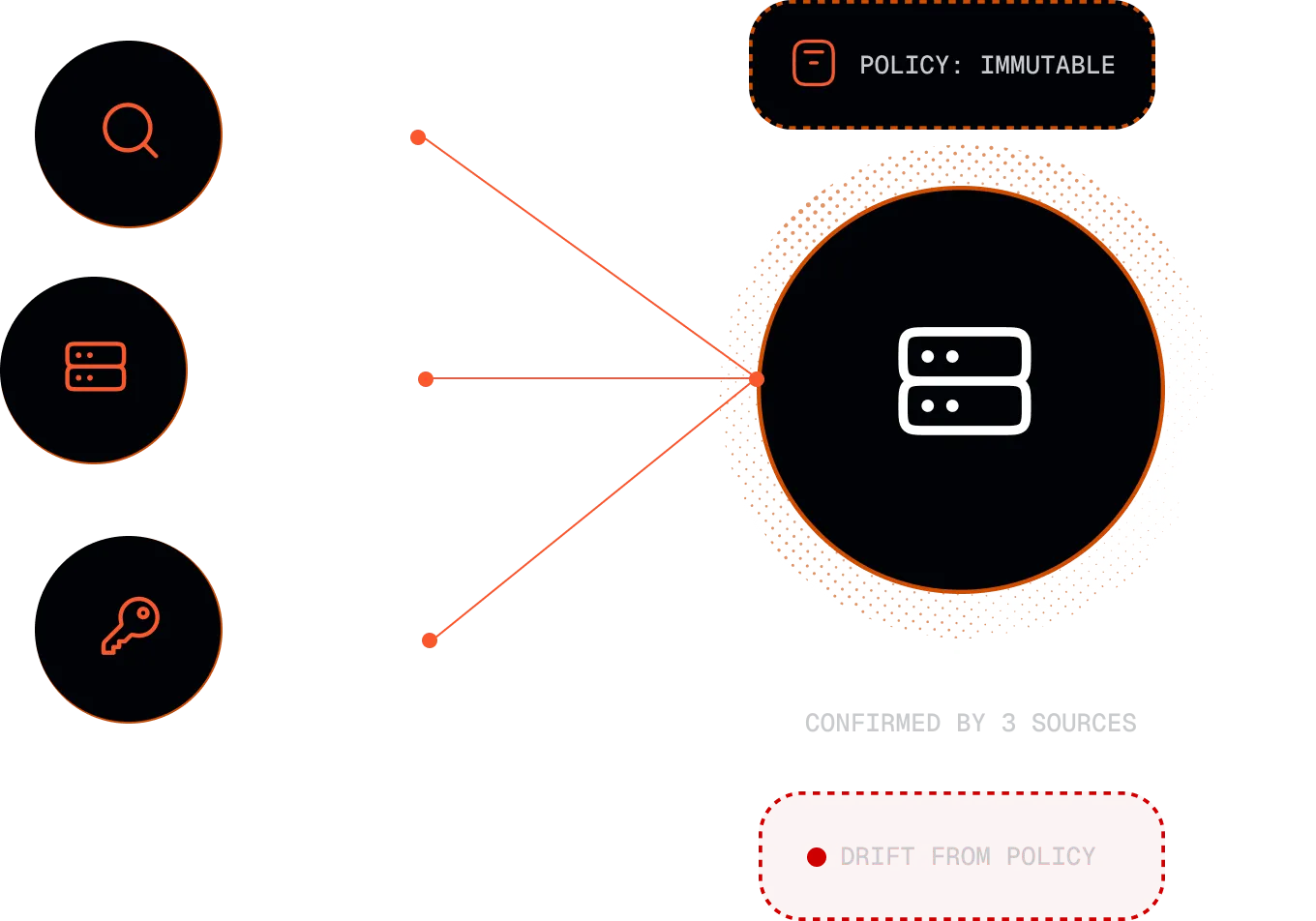
Argos99 reads policy statements from connected sources and compares them against live telemetry. When the environment drifts from the posture your policies require, you see it before it costs you a restore point. No other platform does this.
06
The resilience
dashboard
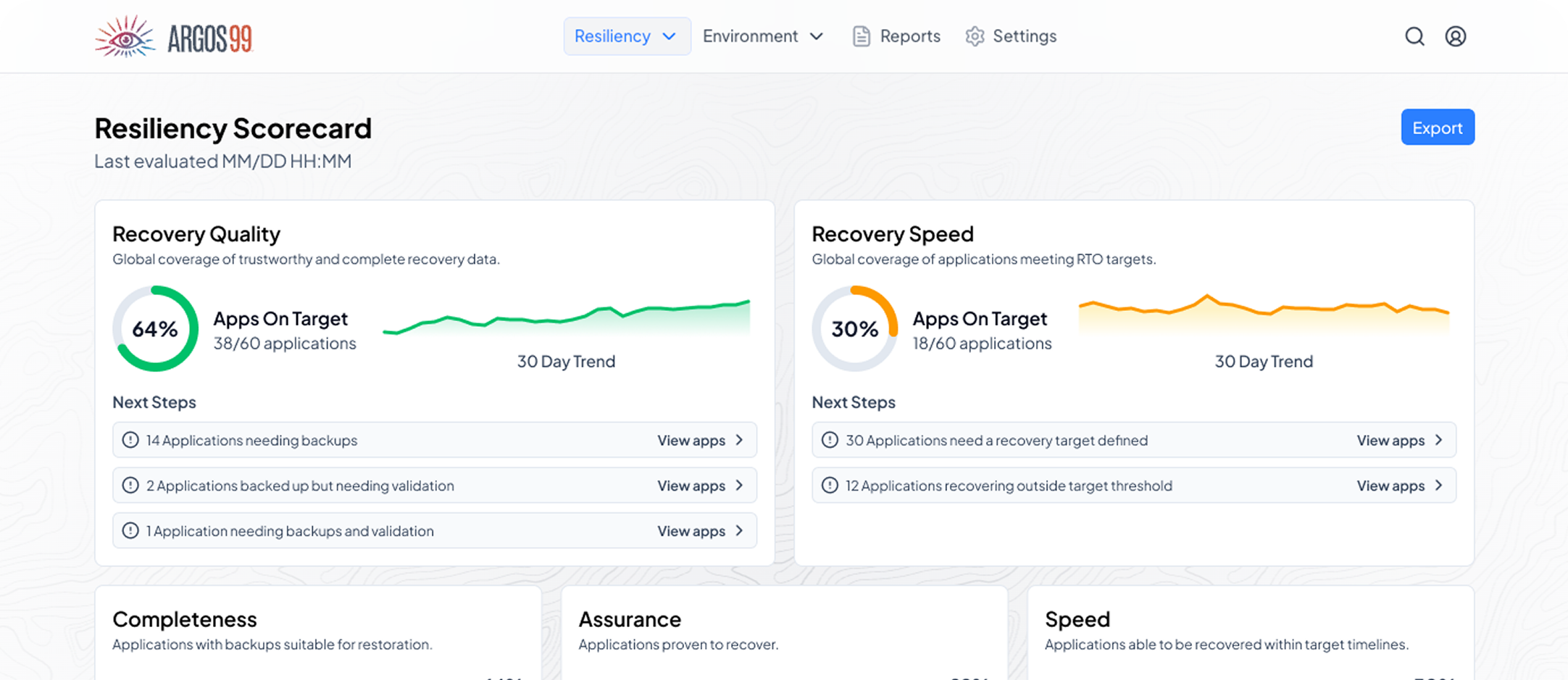
Findings become a ranked work queue for your team and a progress view for your leadership, showing recovery posture today, open gaps, and measurable risk reduction over time. It's the board-ready proof of recoverability that regulators and directors have started demanding.