
Post-Mythos Preview: AI-Accelerated Offense and the Recoverability Problem

Anthropic announced Mythos Preview on April 7, then said they wouldn’t release it. The model found thousands of previously unknown vulnerabilities, built working exploit chains without human help, and surfaced bugs that had survived 27 years of manual review in OpenBSD.
You already know this. Your inbox has been full of it for weeks. Everyone is talking about what Mythos means for the attack surface.
Almost nobody is talking about what it means for recoverability.
That’s the conversation that needs to be had, because it changes the board discussion, the budget discussion, and the insurance discussion all at once.
Mythos is not a one-off. Five months before the Mythos Preview announcement, Anthropic disclosed the first AI-orchestrated espionage campaign. A Chinese state-affiliated group used Claude Code as the operational engine, targeting roughly 30 organizations. The AI handled 80 to 90 percent of the work autonomously. Two months before that, Anthropic documented a cybercriminal using Claude Code to run data extortion operations against 17 organizations across government, healthcare, and emergency services.
Anthropic expects equivalent offensive capabilities from other labs within 6 to 18 months. And researchers at the Alan Turing Institute have pointed out how quickly controlled models can be copied, modified, or uncensored once similar capabilities reach public ecosystems.
If you’re still framing frontier AI as a future threat in your board materials, it’s time to update those PowerPoint slides. The capability already exists. The diffusion timeline is the only variable.
The Mythos response has a blind spot
The post-Mythos conversation has followed a predictable pattern. If AI compresses attack timelines, defenders need AI-accelerated detection, faster alerting, and more automated responses.
That logic is correct as far as it goes. Detection matters. Speed matters. Nobody’s reinventing the wheel with this kind of advice.
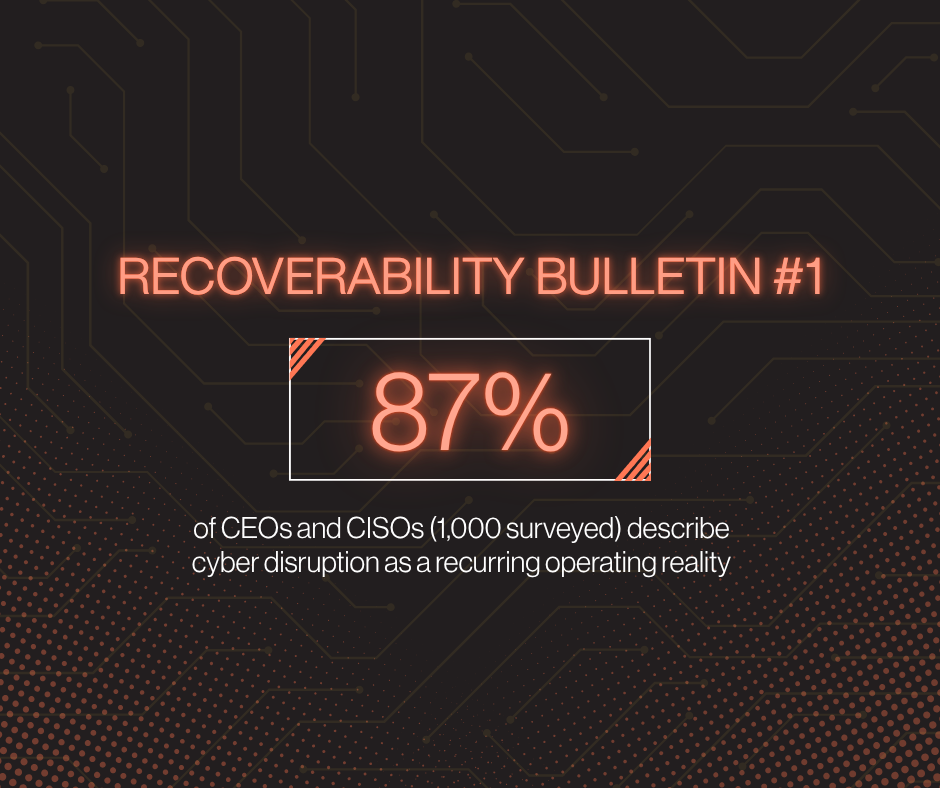
But most of the conversation is built around two variables: how fast attackers can move and how fast defenders can detect them. The working assumption underneath is that closing the detection gap keeps the business alive.
We have been in the room when that assumption failed.
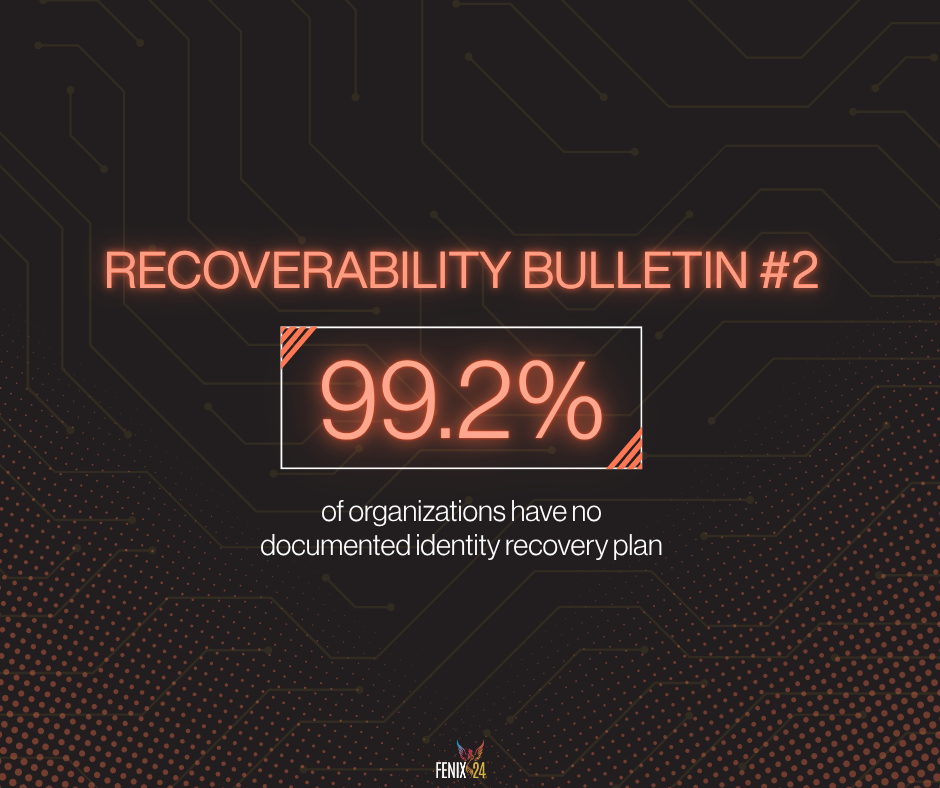
Fenix24’s recovery team has seen organizations with mature SOCs, strong EDR coverage, and fast detection still go dark for weeks. While detection worked as intended, Active Directory was still destroyed, backups were encrypted, dependency chains were unclear, and nobody could say with confidence what had to come back first or how long it would take.
The UK AI Safety Institute evaluated Mythos independently and found it completed a 32-step corporate network intrusion simulation in 3 out of 10 attempts, a benchmark no previous model had reached. AISI also noted the evaluations ran in simplified environments without layered defenses or human responders.
Bruce Schneier called Mythos “both inevitable and unsurprising” and argued the real lessons have not changed. Organizations still need good architecture, least privilege, proper documentation, and continuous testing. Bain made a similar point, noting that AISI’s own testing found Mythos could not reliably execute autonomous attacks against well-hardened defenses and that most companies should start by fixing old problems.
They’re right… but one fundamental is still missing.
Recovery.
Detection tells you something is happening. Recovery determines whether the business comes back. The industry keeps treating these as separate concerns. In an actual incident, they are sequential parts of the same event. And the second part has been underfunded and undertested relative to the first for years.
Hardened environments raise the cost for attackers, but if your recovery posture is untested, you may not know which side of that line you’re on until the worst possible moment.
The margin for pretending recovery will sort itself out is gone.
Three conversations just got easier
Mythos creates a window where recovery investment is an easier sell than it has been in years. These are the conversations to push right now.
The board conversation
Boards used to ask, “Can our tools detect the attack?” Now they want to know, “Can the business come back?”
That shift creates an opening for a conversation most security programs have been avoiding. The majority of security teams can report on detection metrics. Far fewer can report on recovery metrics with the same confidence.
If you’ve never tested your recovery time against a realistic scenario (Active Directory compromised, backups targeted, communications degraded), say so and propose the test. Boards respond better to “we identified this gap and here’s how we can close it” than to discovering the gap during an actual incident.
The insurance conversation
Cyber insurance underwriters are increasingly asking about recovery capability, not just prevention controls. Application questionnaires are starting to probe backup survivability, tested RTOs, and recovery sequencing.
If you can demonstrate tested recoverability (immutable backups, validated restoration, mapped dependencies, a measured recovery time), you are in a stronger position on coverage terms, premiums, and exclusions. If you cannot, the carrier’s actuaries will price that uncertainty into your policy.
Several carriers are also moving toward requiring evidence of recovery testing as a condition of coverage, not just evidence of backup processes. If your renewal is coming up, a tested recovery number is worth more than a green dashboard.
The regulatory conversation
SEC disclosure rules already require material cybersecurity incident reporting within four business days. How quickly can you determine materiality when systems are down and information is incomplete?
DORA (for anyone with EU financial sector exposure) goes further, requiring organizations to demonstrate digital operational resilience through scenario-based testing. Recovery capability is written into the regulation, not implied.
The direction is clear across jurisdictions. Regulators are moving from “did you have a plan?” to “did you test it, and can you prove the results?” A documented RTO that has never been validated is becoming a compliance liability as well as an operational one.
What comes next?
The model after Mythos will be better by every measure.
That’s the trajectory every frontier lab has published for the last three years, and nothing about Mythos suggests the curve is flattening. Anthropic chose not to release this one. The next lab to reach equivalent capability may make a different choice. Or the capability leaks. Or it gets reproduced independently. The containment question is interesting, but it’s not the one that should keep you up at night.
When offensive capability is commoditized and automated, you must ask yourself, “What happens after we’re attacked?”
The organizations that will navigate this next phase well are the ones treating recovery as an engineering discipline with the same rigor they apply to detection and response. That’s the differentiator. Always has been, in fact. Mythos and frontier AI simply removed the last reasonable excuse for not acting on it.
Resilience & recovery in a post-Mythos world
Most assumptions about resilience and recoverability fail during a real attack.
- “Immutable backups” turn out to not be immutable after all.
- Infrastructure gets destroyed, not just data.
- Insufficient asset and dependency mapping causes days or weeks of downtime.
- RTOs and RPOs aren’t realistic.
Analysts are laying it all out when it comes to the future of resilience. Want the blueprint for architecting and executing real cyber resilience? Download Omdia’s new technical validation report, Architect and Execute Resilience with Fenix24.
Know where you stand before a breach
Fenix24 built our assessments, our tooling, and our cyber resilience program from the patterns we’ve seen in over 1,000 breach engagements.
Our resilience assessment exists because standard security assessments don’t address what matters during a ransomware event. You don’t need a check-the-box audit on perimeter defenses or detection tooling. You need to know if your business will survive its worst day. Powered by Argos99, our enterprise-grade resilience platform, this assessment gives you unmatched visibility into:
Backup survivability. Can your backups withstand an attacker who has mapped the environment and holds privileged credentials? Can you restore from them when the rest of the environment is compromised?
Dependency mapping and recovery sequencing. Do you have a current model of what depends on what, and is the recovery order based on those relationships or on assumptions nobody has tested?
Identity infrastructure recovery. Can you rebuild Active Directory from scratch? How long does it take? Can your team execute that process under pressure?
Operational recovery capability. Can the team sequence and execute recovery with degraded communications and incomplete information, and has anyone measured how long that takes?
Recovery gap analysis. Where do the plans break down? Which gaps create the most risk? What should be fixed first?
Ready to test your recoverability? Schedule your resilience assessment today. Reach out to us at 423.305.7890 or email info@fenix24.com.